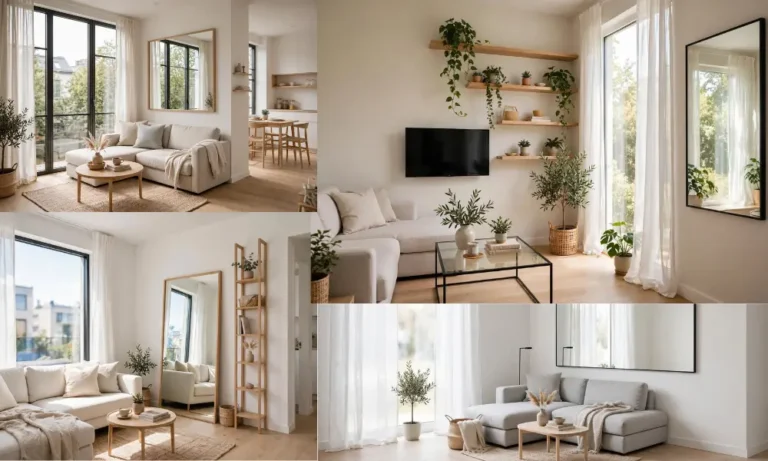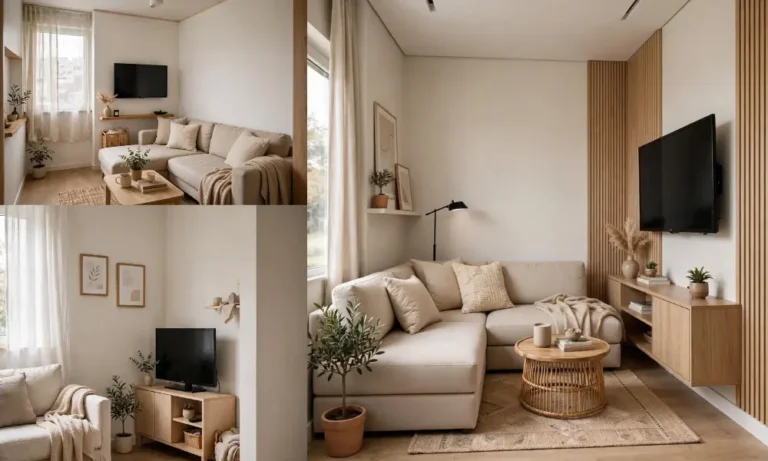
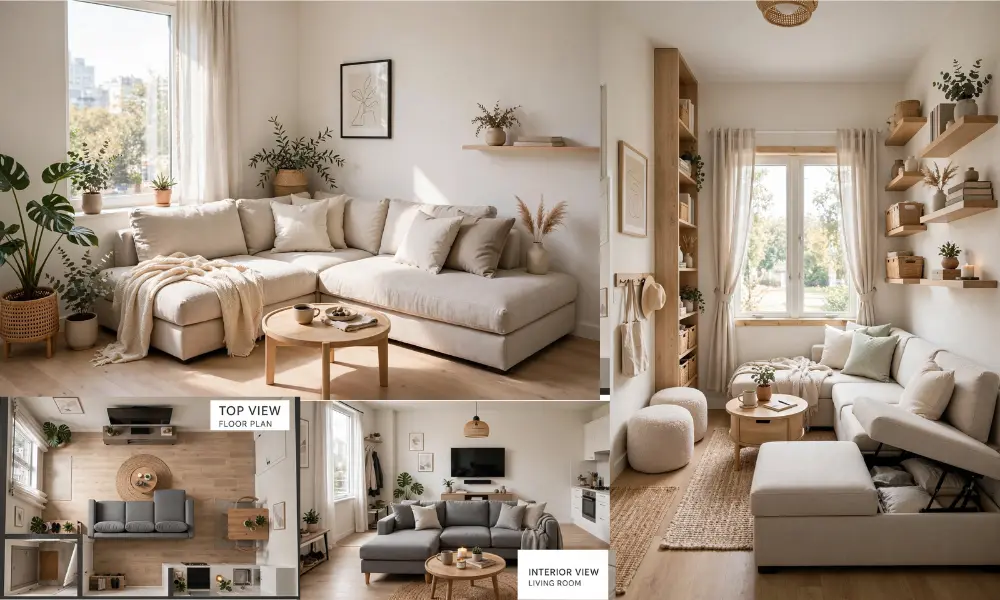
Small Living Room Layout Ideas With a Sectional Sofa
A sectional sofa can turn a small living room into a comfortable, stylish seating area without the need for multiple chairs or bulky furniture. The challenge is finding a layout that gives you plenty of seating while leaving enough room to walk, relax and enjoy the space.
The right arrangement depends on your room shape, the position of your windows and TV, and the size of the sectional itself. These small living room layout ideas with a sectional will help you make the most of every inch without making the room feel crowded.
Before You Choose a Layout: Measure and Plan
Even the best layout fails if the sectional is too large for the room. Spend ten minutes on measurements and you will avoid most of the regrets that come with a small living room.
Measure the Room and the Sectional
Measure the length and width of the room, then check the sectional full dimensions, including the chaise. Do not forget to account for door swings, window access, radiators and any paths people use every day. As a rough guide, apartment-sized sectionals are often around 80 to 100 inches (200 to 250 cm) along the longest side, but sizes vary widely by brand, so always check the product page.
Mark the Footprint With Masking Tape
Use masking tape or cardboard to outline the proposed sofa on the floor. This simple step shows how much space the sectional will take up and whether you will still have room for a coffee table and clear walkways. Leave the tape down for a day or two and walk around it as you normally would.
Leave Enough Clearance
Aim for a walkway of about 30 to 36 inches (75 to 90 cm) through the main routes in the room, and roughly 14 to 18 inches (35 to 45 cm) between the sofa and the coffee table. A smaller sofa that fits the room well is usually more practical than a larger model that forces you to squeeze past furniture.
Choose Between a Left-Facing and Right-Facing Chaise
The chaise orientation decides which side of the sectional extends farther into the room, and the right choice depends on your layout rather than a universal design rule. A left-facing chaise may suit a room where the right side needs to stay open for an entrance or walkway, while a right-facing chaise suits the opposite arrangement. Always confirm how the retailer defines left-facing and right-facing, because conventions can vary.
Consider where people enter the room, where the TV sits and which side offers the most uninterrupted floor space before you decide.
1. L-Shaped Sectional in a Corner
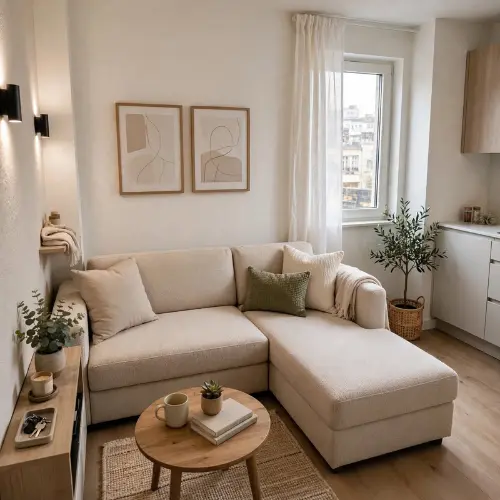
Placing an L-shaped sectional in a corner is one of the most effective ways to maximize seating in a small living room. It uses two sides of the room while leaving the center open for a coffee table and easy movement.
Position the longer side along the main wall and let the shorter chaise extend along the adjoining wall. This works particularly well in square or rectangular rooms where floor space is limited. To keep the layout balanced, choose a sectional with slim arms and a compact profile, and add a small round or oval coffee table to make movement easier.
2. Sectional Along Two Walls in a Studio or Open-Plan Space
If your living room shares space with a dining area, a bed nook or an entrance, a sectional that wraps around two walls can create a neat, built-in look. It keeps the sofa out of the main walkway and gives the seating area a clear boundary.
The difference from a standard corner layout is the purpose: here the sectional claims a defined zone so the rest of the room can stay flexible. Keep the entry route open, and avoid pushing extra furniture into every remaining corner. A slim side table or a wall-mounted lamp often provides all the extra function you need.
3. Sectional Facing the TV
When watching television is the main activity, position the sectional opposite the TV to create a comfortable and functional layout. Wall-mounting the TV removes the need for a bulky entertainment unit, and a narrow media console works well if you want storage without taking up floor space.
Check that the seating sits at a comfortable viewing distance and does not block doorways or windows. A good starting point is about 1 to 1.5 times the screen diagonal for a 4K TV. If the room is particularly narrow, a compact sectional with a shorter chaise may work better than an oversized model.
4. Floating the Sectional to Divide the Room
A sectional does not always need to sit against a wall. In an open-plan living room, positioning it slightly away from the walls helps define the seating area and separate it from the dining space or kitchen. The back of the sofa becomes a natural divider, with no screens or extra furniture required.
This layout works best when there is enough space behind and around the sofa for comfortable movement, usually at least 30 inches. In a very small room, floating a large sectional can obstruct walkways and make the space feel tighter, so measure carefully first. A narrow console table behind the sofa makes good use of the divider and gives you a spot for a lamp or keys.
5. Chaise Facing the Window for a Reading Corner
If your living room has a good window but no space for a separate armchair, point the chaise toward the light. The chaise doubles as a lounging spot, and you get a reading nook without adding another piece of furniture.
Leave enough room to open the window or curtains, and avoid placing the back of a tall sectional directly in front of the glass. A slim floor lamp beside the chaise makes the spot usable in the evening.
6. A Modular Sectional You Can Rearrange
A modular sectional is built from separate pieces, so you can change the shape as your needs change. A three-piece set can form a compact L today and an extra-long sofa in a different room later. This flexibility is valuable in rentals, where the next living room may have a very different shape.
Look for pieces that connect securely, and consider a reversible chaise so you can switch sides when you move. Modular sets also make it easier to get furniture through narrow doors and stairwells.
7. Pair the Sectional With a Small Coffee Table
A coffee table completes the seating area, but an oversized one can make a small living room difficult to navigate. The goal is a table that provides useful surface space without interrupting movement.
Round, Oval and Nesting Tables
Round and oval coffee tables have no sharp corners to walk around. Nesting tables are another smart choice: use them when needed and tuck them away when you want more open floor space.
Storage Ottomans and Lift-Top Tables
If storage is a priority, consider a compact lift-top table or a storage ottoman that doubles as a footrest. Keep the tabletop relatively uncluttered to maintain a clean, spacious look. A rug under the front legs of the sectional and the coffee table also ties the zone together.
8. Layout for a Long, Narrow Living Room
In a narrow room, a large L-shaped sectional can eat the whole width. Instead, run a compact sectional with a short chaise along one long wall and keep the opposite side as the walkway. Place the TV on the short wall so the screen faces down the length of the room.
If the room is only a little wider than the sofa, choose a sectional with slim arms and a shallow seat depth, and skip the second armchair. Leaving the walkway clear matters more than adding seats.
Styling Tips to Keep a Sectional From Feeling Heavy
A sectional is a large visual block, so small choices make a noticeable difference. Light, neutral upholstery such as beige, soft gray or warm white reduces visual weight, and a sofa with exposed legs lets you see more of the floor, which makes the room feel bigger. Keep throw pillows to a manageable number and use a couple of contrasting textures rather than many different patterns.
Good lighting also helps. Use a floor lamp or wall-mounted light instead of a bulky table lamp, and place a mirror where it can reflect natural light without sitting opposite the TV.
Common Mistakes to Avoid With a Sectional in a Small Room
The most common mistake is buying a sectional that is too large and then adding a coffee table and chairs around it. Other frequent problems include blocking a door or window with the chaise, pushing every piece of furniture against the wall so the room feels flat, and choosing a deep, bulky coffee table. Skipping the masking tape test is another way to end up with a sofa that does not fit.
Frequently Asked Questions
Final Thoughts
A sectional sofa can work beautifully in a small living room when its size and placement suit the space. Corner layouts are a practical starting point, while TV-facing arrangements, window-facing chaises and floating sectionals can work well when the room allows.
Focus on three essentials: choose the right sofa dimensions, keep walkways clear and avoid unnecessary furniture. With a thoughtful layout, you can enjoy generous seating and a living room that feels comfortable rather than cramped.