Small Living Room Ideas That Make a Tiny Space Feel Bigger
You know the moment. You carry a laundry basket across the living room, clip the coffee table with your shin, and wonder whether the room has shrunk since you moved in. It hasn’t. In a small space, a few wrong choices add up fast, and a few smart ones can change how the whole room feels.
The good news is that you rarely need a renovation. Furniture that fits, light colors, good lighting and a layout that leaves room to move can make a tiny living room feel open and comfortable. Here are the ideas that make the biggest difference, including specific layouts you can try this weekend.
1. Choose Space-Saving Furniture
Oversized furniture overwhelms a small living room and leaves little space to walk or relax. Pick pieces that suit the room’s proportions and still feel comfortable.
Pick a Compact Sofa
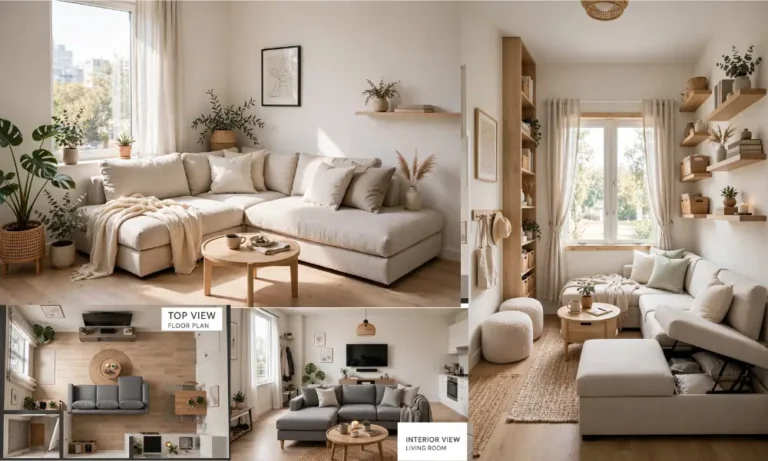
A compact sofa with clean lines makes a small room feel more spacious. Measure your floor space before you buy, and consider a loveseat or an apartment sized sofa if a standard three seater leaves you no room to move.
Sofas with raised legs help too, because you can see more of the floor beneath them. Skip bulky armrests and tall, oversized backs when space is tight.
Use Furniture That Does Two Jobs
Furniture with more than one purpose saves floor space. A storage ottoman doubles as extra seating, nesting tables tuck away when you don’t need them, and a coffee table with built in storage hides clutter.
If your living room also works as an office or dining area, choose flexible pieces that adapt to different activities without crowding the room.
2. Use Light Colors to Open Up the Room
Color has a big effect on how large a room feels. Light shades reflect more light, so the room looks brighter and less enclosed.
Choose Light, Neutral Wall Colors
White, cream, soft beige and pale gray work well in small living rooms. They create a clean backdrop and help natural and artificial light travel across the space.
You don’t need to make everything white. Cream walls, a beige sofa and light wood furniture look warm and coordinated without feeling busy.
Stick to a Consistent Color Palette
Too many contrasting colors can split a small room into visual chunks. Choose two or three shades that go well together and repeat them in your furniture, curtains, cushions and accessories.
For example, pair warm white walls with a beige sofa, natural wood accents and a few muted green cushions. The room feels connected, and it still has personality.
3. Arrange Furniture to Maximize Space
A beautifully decorated room can still feel cramped if the furniture blocks movement. A better arrangement can make the same room feel more open and easier to use.
Keep Walkways Clear
Leave enough space between pieces to walk comfortably. A main path of about 30 to 36 inches works well in most rooms. Keep side tables, baskets and extra chairs out of the main routes.
Arrange seating around a clear focal point, such as a television or a window, and keep the entrance and the paths through the room unobstructed.
Measure Before You Buy
Before you buy a sofa, coffee table or armchair, measure the room and sketch where each piece will go. Include doors, windows and walkways in your plan. Painter’s tape on the floor is a cheap way to test the size of a piece before you order it.
A large sectional suits some small rooms and overwhelms others. Compare its footprint with a compact sofa and a separate chair before you decide.
4. Try These Specific Small Living Room Layouts
The right layout depends on the shape of your room. These five arrangements cover the most common small spaces.
The Sofa Against the Longest Wall
This is the simplest layout and works for most rectangular rooms. Put the sofa against the longest wall, add a small coffee table in front and keep the middle of the room open. Leave about 14 to 18 inches between the sofa and the coffee table so you can reach your drink without bumping your knees. A round or oval table avoids sharp corners in a tight space.
The Sofa and Two Chairs Layout
If your room is close to square, set the sofa on one side and two slim armchairs facing it, with a small table in the middle. This creates a cozy conversation area. Choose chairs with open arms and visible legs so they take up less visual space.
The Corner Layout
Place a loveseat or sofa along one wall and an armchair on the adjacent wall, leaving the diagonal across the room open. A small round table in the corner ties the two together. This layout keeps the center of the room clear and gives you more seating than a lone sofa.
The Layout for a Narrow Room
In a long, narrow room, keep the sofa on one of the long walls and save the other side for a clear path. Use a slim console table or a narrow shelf on the opposite wall instead of a bulky cabinet. Lay a rug lengthwise so it draws the eye along the room.
The Layout for an Open Plan or Studio Space
When your living room shares space with a dining or sleeping area, use a rug to mark out the seating zone. Set the sofa with its back toward the other area, and place a narrow console behind it to act as a divider. The room feels organized without walls or heavy furniture.
Choose the Right Rug Size
A rug that is too small can make a room look smaller. Choose one large enough that at least the front legs of your sofa and chairs sit on it. That ties the seating together and makes the floor feel wider.
5. Use Mirrors to Create the Illusion of Space
Mirrors make a small living room feel brighter and larger. They reflect light and the details around them, which adds a sense of depth.
Place a Large Mirror Near a Window
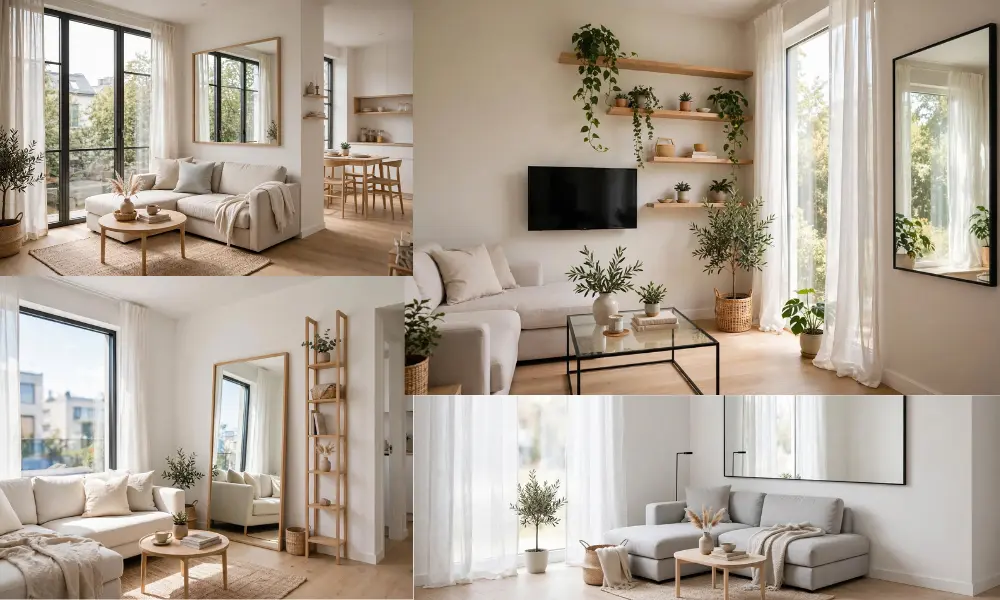
Hang a large mirror opposite or beside a window so it bounces daylight into the room. A darker living room will feel brighter and more open.
One large wall mirror gives a stronger sense of depth than several small decorative ones. Choose a frame that suits your decor, and avoid placing the mirror where it reflects clutter or an unattractive view.
6. Maximize Natural Light
A bright room feels more open than a dark one. Making the most of your existing windows is one of the easiest ways to improve a small living room.
Use Lightweight Curtains and Hang Them High
Heavy, dark curtains make windows look smaller and block daylight. Choose lightweight curtains in a light, neutral shade for a softer, more open look.
Mount the rod slightly above the window frame and let it extend past the sides when you can. Let the fabric fall to the floor. The window looks wider and taller, and your eye travels upward.
Keep Windows Unobstructed
Don’t put bulky furniture in front of windows. Keep window sills fairly clear and use simple window treatments that let daylight in.
If the room gets little natural light, combine ceiling lighting with floor or table lamps to brighten dark corners and balance the space.
7. Make Use of Vertical Space
When floor space is limited, use your walls for storage and draw the eye upward.
Use Tall Shelving and Wall Mounted Storage
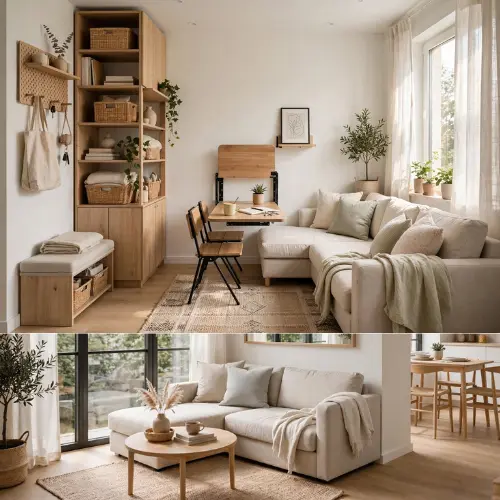
Tall, narrow shelving holds more than a wide cabinet and takes up less floor. Floating shelves can hold a few books, small plants or carefully chosen decorative pieces while keeping the floor clear.
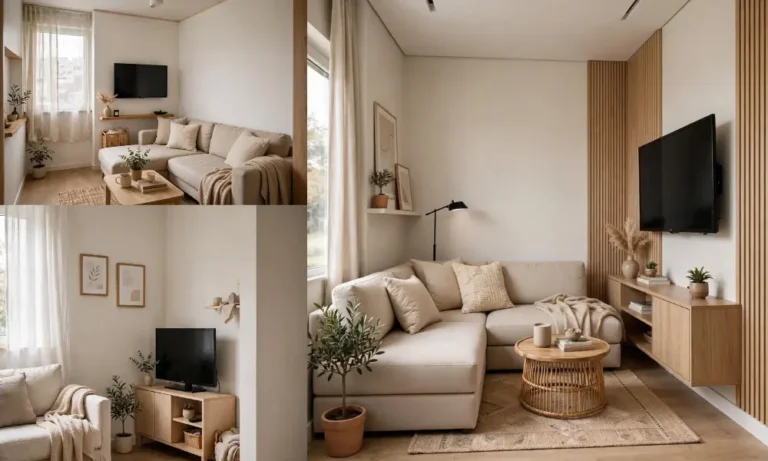
Wall mounted lighting and media units free up more floor area. Keep shelves organized, though, because overcrowded displays make a small room feel cluttered.
8. Reduce Clutter With Smart Storage
Too many visible belongings make a small living room feel crowded, even when the furniture fits. Smart storage keeps the room looking clean and spacious.
Choose Furniture With Hidden Storage
Storage ottomans, lift top coffee tables and compact cabinets give blankets, remote controls, magazines and everyday items a place to go.
Pick storage that suits what you actually own instead of adding extra furniture. One multifunctional piece often replaces several smaller ones.
Keep Decorative Accessories Minimal
You don’t have to remove every decoration. Display a few meaningful pieces and leave some surfaces empty.
Choose a small number of cushions, a simple centerpiece or one statement artwork instead of filling every table and shelf. The room looks calmer, and your furniture and decor have space to stand out.
Frequently Asked Questions
Final Thoughts
Making a small living room feel bigger is less about adding decor and more about using the space you already have. Choose furniture that fits, keep a light and coordinated palette, let in as much daylight as you can and keep your walkways clear.
Start with the changes that matter most. Clear out unnecessary clutter, rearrange oversized furniture and improve how light moves through the room. A few thoughtful adjustments can make even a tiny living room brighter, more comfortable and much more inviting.